

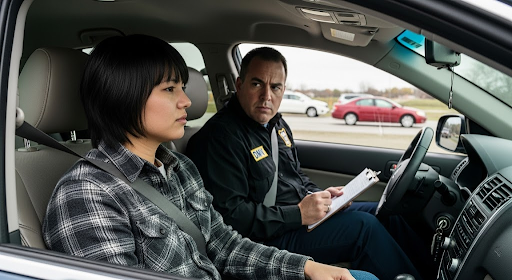
Getting your driver’s license is a huge milestone—especially if you’ve just completed your DMV Drivers education course and passed your written test. You’ve studied the laws, you’ve practiced parking, and you’re ready to hit the road.
But here’s the truth: even with all that preparation, new drivers often make avoidable mistakes. And those mistakes can lead to anything from minor tickets to serious accidents—or, at the very least, a big dose of frustration.
The good news? Most of these slip-ups are common, predictable, and totally preventable.
So whether you’re just starting behind-the-wheel training or newly licensed and cruising solo, let’s dive into the top mistakes new DMV drivers make—and how to avoid them like a pro.
🚫 1. Underestimating the Importance of Defensive Driving
You’ve probably heard the term “defensive driving” in your DMV Drivers education course, but it’s more than just a buzzword—it’s a survival skill.
New drivers often assume that if they follow the rules, they’ll be safe. But what about the people who don’t follow the rules? Texting drivers, speeders, tailgaters, red-light runners—they’re out there, and it’s your job to anticipate their behavior.
✅ How to avoid it:
- Always scan ahead and use your mirrors frequently.
- Never assume other drivers will do the right thing.
- Keep a safe following distance (at least 3 seconds behind the car in front of you).
🚦 2. Rolling Stops at Stop Signs
This is a classic rookie move—and one that examiners love to mark down during driving tests. A “rolling stop” means you slow down at a stop sign but never fully stop, which is illegal and unsafe.
✅ How to avoid it:
- Always come to a complete stop—where your car stops moving entirely—behind the stop line or crosswalk.
- Count “one-one-thousand” before proceeding to make sure you’ve truly stopped.
📱 3. Getting Distracted by Phones (Even Hands-Free)
California law prohibits all drivers under 18 from using any type of phone while driving—even hands-free. Still, many new drivers sneak a glance at a text or take a quick call, thinking it’s harmless.
Spoiler: It’s not.
Distracted driving is one of the leading causes of crashes among teen drivers.
✅ How to avoid it:
- Turn your phone on Do Not Disturb mode before starting the car.
- Use your phone only when safely parked.
- Don’t rely on passengers to distract you from driving tasks.
🚗 4. Forgetting Basic Car Maintenance
You may have passed your DMV test, but driving responsibly goes beyond knowing the rules—it also means taking care of your car.
Ignoring things like low tire pressure, old wiper blades, or dashboard warning lights can lead to unsafe driving conditions or mechanical failures.
✅ How to avoid it:
- Check tire pressure, oil level, and lights regularly.
- Learn what your dashboard warning lights mean.
- Keep your gas tank at least ¼ full to avoid running out at the worst time.
🛑 5. Not Understanding Right-of-Way Rules
Right-of-way confusion is one of the most common causes of fender benders and near-misses, especially at four-way stops and intersections.
Many new drivers hesitate, guess, or assume another driver will “let them go.” That’s a recipe for danger.
✅ How to avoid it:
- At a 4-way stop, the first driver to stop has the right of way.
- If two cars arrive at the same time, the car on the right goes first.
- Yield to pedestrians and never assume someone else will wait for you.
🌀 6. Overcorrecting When Making a Mistake
You drift a little too close to the edge of your lane—and suddenly, in a panic, you jerk the wheel. This is called overcorrecting, and it can cause you to swerve, spin, or crash.
New drivers often panic when something doesn’t go perfectly—and that reaction is often worse than the original mistake.
✅ How to avoid it:
- Stay calm and make small, smooth steering adjustments.
- Practice staying centered in your lane during quiet drives.
- Don’t slam the brakes unless it’s truly an emergency.
🛣️ 7. Speeding—or Driving Too Slowly
Speeding is dangerous, of course. But did you know driving too slowly can also be risky? On busy roads or highways, driving significantly under the speed limit can disrupt traffic flow and cause accidents.
Many new drivers are nervous and “play it safe” by driving 10+ mph under the limit. But on fast-moving roads, that can actually be unsafe.
✅ How to avoid it:
- Always match the flow of traffic—without exceeding the speed limit.
- Stay in the right lane if you’re driving slower than most traffic.
- Build confidence by practicing on quieter roads first.
🎯 Final Thoughts: Learn from Mistakes—But Try Not to Make Them
Mistakes are part of learning. Even the most experienced drivers make them. But as someone who’s just completed your DMV Drivers education or is about to begin your journey, being aware of these common pitfalls gives you a major advantage.
Stay calm, stay focused, and stay informed.
The more confident and prepared you are behind the wheel, the safer and more enjoyable your driving experience will be.
Remember: It’s not just about getting a license—it’s about earning the responsibility that comes with it.

Comments are closed.