

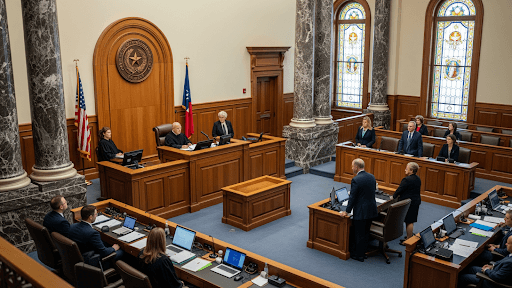
For many, a trial court’s verdict feels like the end of the line. But in the Texas legal system, it is often just the beginning of a complex and demanding process known as an appeal. Navigating the Texas appellate system is a specialized endeavor, requiring a deep understanding of procedural rules, legal precedent, and persuasive brief-writing. It’s a world where the facts of a case are largely settled, and the focus shifts entirely to questions of law.
Understanding the Texas Appellate System
The foundation of the Texas appellate system is its bifurcated structure, meaning it has two separate high courts of last resort. The Texas Supreme Court handles all civil and juvenile cases, while the Texas Court of Criminal Appeals has final jurisdiction over all criminal matters. This unique division underscores the importance of a specialized legal approach, and it’s why a skilled appellate lawyer in Houston is often the ideal professional for the job. These professionals spend their careers mastering the nuances of this system, which is a far cry from the fast-paced, evidence-driven environment of a trial court.
The Role of Intermediate Courts
Appeals from trial courts first go to one of the state’s 15 intermediate Courts of Appeals. For a case originating in Houston, this will typically be either the First or Fourteenth Court of Appeals. Unlike a trial where a single judge presides, these courts hear cases in panels of three justices. Their job is to review the trial record—the transcripts, evidence, and filings—to determine if a legal error occurred that likely affected the outcome. This is where the work of a seasoned appeal attorney in Houston becomes critical. The attorney’s task is to craft a meticulous brief, a written argument that pinpoints the specific errors, cites relevant legal authority, and explains why the lower court’s decision should be reversed.
The Importance of Preserving Error
The process is governed by a strict set of rules. Timelines for filing notices of appeal and submitting briefs are rigid, and a missed deadline can be fatal to a case. This makes the administrative and strategic expertise of an experienced attorney essential. They must not only find the legal error but also demonstrate that the trial attorney properly “preserved” that error for appeal by raising a timely and specific objection during the original proceedings. For this reason, many trial lawyers consult with an appellate lawyer in Houston before and during a trial to ensure that potential issues are properly documented for a possible Texas appeal.
Reaching the Highest Courts
If a party is unhappy with the decision of a Court of Appeals, the journey may continue to the state’s highest courts. This is not an automatic right; both the Texas Supreme Court and the Texas Court of Criminal Appeals have discretionary review, meaning they can choose which cases to hear. They typically take on cases that involve significant legal questions, resolve conflicting rulings between different Courts of Appeals, or address issues of statewide importance. Getting a case before one of these high courts is a significant achievement and requires a different level of advocacy and legal scholarship.
Conclusion: A Critical Final Step
For anyone facing an adverse judgment, the path to justice can be long and complex. But with the right guidance, the fight for a fair legal outcome doesn’t have to end with a trial verdict. An experienced appeal attorney in Houston possesses the specialized knowledge and skills to navigate the intricate Texas appellate system, offering hope and a path forward for those seeking a second chance. The journey through a Texas appeal is a testament to the idea that a court’s first decision isn’t always its last.

Comments are closed.