

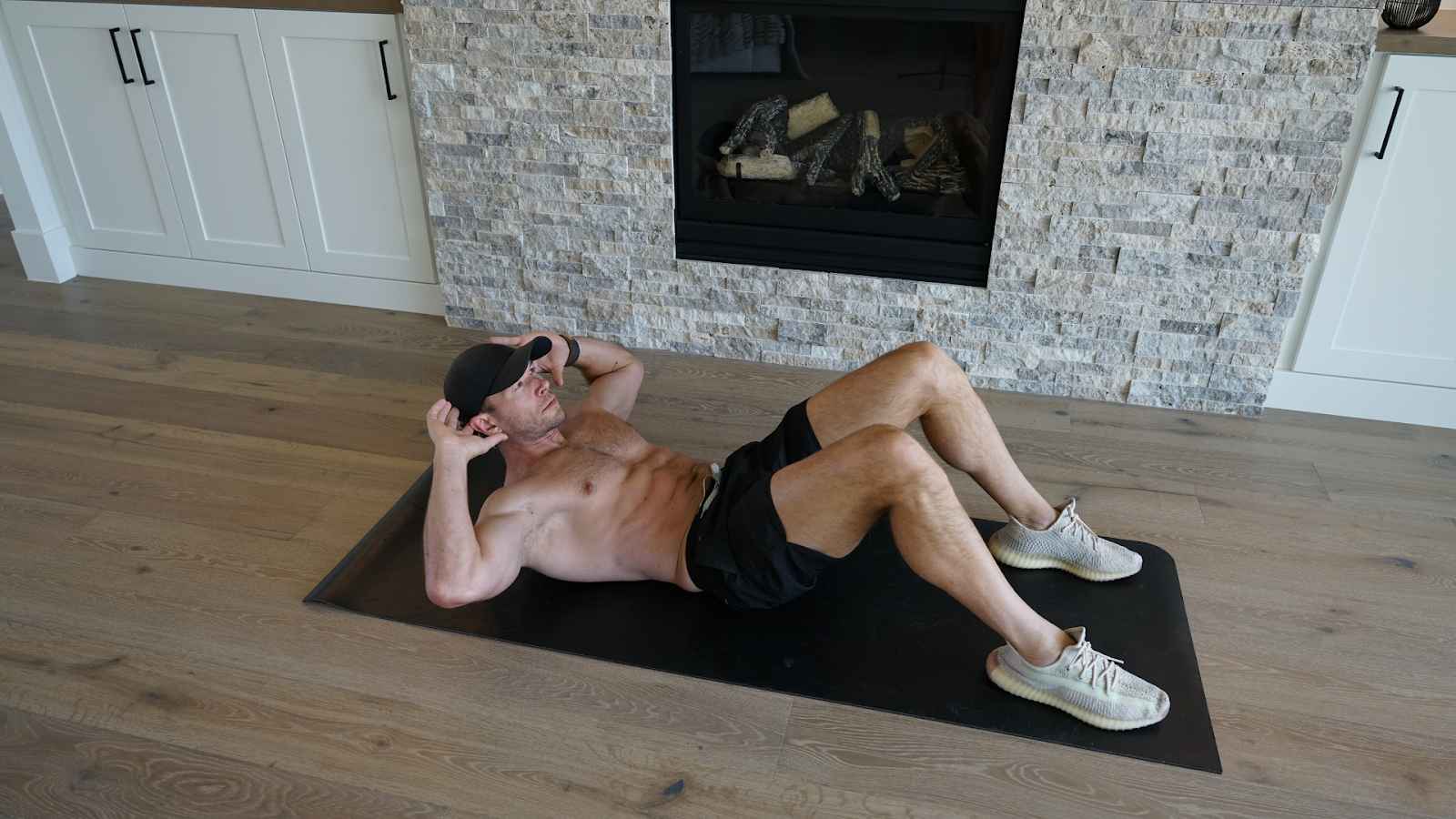
Training abs at home often sounds simple, yet many people feel confused or disappointed by the results.
You might be doing crunches on the floor, holding planks, or following random videos, but your core still doesn’t look or feel stronger.
The frustration grows when you search for how to get abs in 5 days and find unrealistic promises everywhere. Some even wonder how to get a 6 pack in one day, hoping for a quick fix before an event.
The truth is more practical than flashy claims. There is a smarter way to train your abs at home that builds strength quickly while setting realistic expectations.
Keep reading to understand how.
Can You Really Train Abs At Home Without Equipment?
Yes, you can.
Abs respond well to bodyweight training because their main job is stabilization, not lifting heavy weights. The key question is not whether it’s possible, but how to make it effective.
Your core muscles work best when they resist movement, control posture, and stabilize your spine. Floor based exercises, standing movements, and slow controlled reps activate them deeply.
When people ask how to get abs in 5 days, what they usually want is faster engagement and visible tightness, not overnight transformation.
Why Short Ab Timeframes Feel Appealing
Short timelines attract attention because they feel motivating. Searching how to get a 6 pack in one day often comes from wanting instant results for a photo, vacation, or event. While visible definition depends on body fat levels, training can still make your abs feel firmer quickly.
Short programs work best as kickstarts. That’s why formats like a 30 day ab challenge exist to build consistency, strength, and visible improvement over time rather than relying on extremes.
What Exercises Actually Activate Abs At Home?
Not all ab exercises are created equal. Effective training focuses on control, breathing, and tension.
Some reliable bodyweight movements include:
- Slow leg raises with controlled lowering
- Plank variations that challenge stability
- Dead bug movements for deep core engagement
- Standing knee drives for dynamic tension
These exercises work because they force your abs to stabilize your spine instead of just flexing it repeatedly.
How Often Should You Train Your Abs?
Many people assume daily ab workouts are required. That’s not always true. Abs recover faster than larger muscles, but they still need rest.
For most beginners:
- 4 to 6 short sessions per week work well
- Sessions can be as short as 10 to 15 minutes
- Quality matters more than volume
If your goal is to get abs in 5 days, short daily sessions with proper form can help you feel tighter and stronger quickly without overtraining.
The Role Of Consistency And Progression
One reason people lose motivation is a lack of structure. Random workouts feel productive but rarely deliver progress. Structured approaches, such as a 30 day ab challenge, give your training direction and progression.
Progression doesn’t mean doing endless reps. It means:
- Increasing time under tension
- Improving control and range of motion
- Advancing exercise difficulty gradually
This is why people who follow a 30 day ab challenge often notice better posture, core strength, and visible changes compared to unplanned routines.
Managing Expectations About Fast Results
It’s important to address the question of how to get a 6 pack in one day, honestly. While hydration changes and muscle engagement can temporarily enhance definition, lasting abs require consistent training and nutrition.
Instead of chasing instant results, focus on:
- Core engagement in daily movements
- Regular training habits
- Gradual fat reduction if needed
Short term routines are best used as motivation, not miracles.
How To Combine Short And Long-Term Ab Goals
A smart approach blends quick engagement with long-term structure. You might start with a short routine focused on how to get abs in 5 days, then transition into a longer program.
This is where programs like a 30 day ab challenge fit naturally. They build on early momentum while reinforcing discipline and form. Over time, your abs become stronger, more defined, and more functional.
Final Thoughts On Training Abs At Home
Training abs without equipment is not a limitation—it’s an advantage when done correctly. You don’t need endless crunches or extreme promises about how to get a 6 pack in one day.
What you need is focused movement, consistency, and realistic timelines. When your training balances short term motivation with long term structure, abs stop feeling mysterious and start feeling achievable.

Comments are closed.