

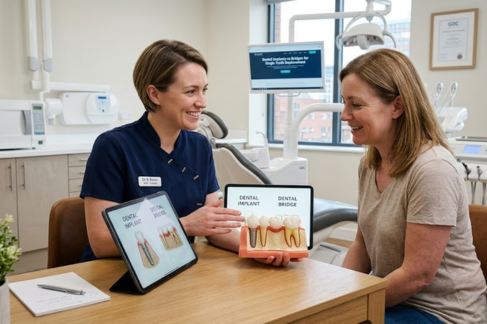
Losing a single tooth can affect more than your smile. It can make chewing uncomfortable, affect the way you speak, and leave you feeling self-conscious. A missing tooth can also allow nearby teeth to move into the empty space over time.
Fortunately, there are several ways to replace a missing tooth. Two common options are dental implants and dental bridges. If you are considering single tooth replacement in Coventry, understanding the differences between these treatments can help you have a more informed discussion with your dentist.
What Is Single Tooth Replacement?
Single tooth replacement involves replacing one missing tooth with an artificial tooth that looks and functions as naturally as possible.
The right treatment depends on several factors, including your oral health, the condition of your jawbone and neighbouring teeth, your preferences, and your budget.
Dental implants and bridges are two popular options, but they work in very different ways.
What Is a Dental Implant?
A dental implant is a small post, usually made from titanium, that is placed into the jawbone. It acts as an artificial tooth root.
Once the implant has healed and become stable, a dental crown is attached to it. The crown is designed to look like a natural tooth and fill the gap left by the missing tooth.
A single dental implant can therefore replace the entire missing tooth without relying on the neighbouring teeth for support.
Benefits of Dental Implants
Dental implants offer several potential benefits:
- They can look and feel similar to natural teeth.
- They do not usually require neighbouring healthy teeth to be reduced.
- They provide a stable foundation for the replacement tooth.
- They can make eating and chewing more comfortable.
- With good oral hygiene and professional care, they can be a long-term tooth replacement option.
- The implant can help provide stimulation to the jawbone.
However, implants involve a surgical procedure and usually require a longer treatment period than a bridge.
What Is a Dental Bridge?
A dental bridge replaces a missing tooth by placing an artificial tooth, known as a pontic, between supporting teeth.
For a traditional bridge, the teeth next to the gap are prepared so that crowns can be placed over them. The artificial tooth is then attached between these crowns.
A bridge therefore uses the surrounding teeth to support the replacement tooth.
Benefits of Dental Bridges
Dental bridges can be an effective option for replacing a single missing tooth.
Some potential benefits include:
- Treatment can generally be completed more quickly than an implant.
- No implant surgery is required.
- A bridge can restore the appearance of your smile.
- It can improve your ability to chew.
- It can prevent the neighbouring teeth from moving into the gap.
- It can provide a fixed alternative to a removable denture.
However, traditional bridges require support from neighbouring teeth. If these teeth are healthy, your dentist will need to consider whether preparing them is appropriate.
Dental Implants vs Bridges: Key Differences
Although both treatments can replace a missing tooth, there are some important differences.
| Feature | Dental Implant | Dental Bridge |
| Support | Jawbone | Neighbouring teeth |
| Surgery | Usually required | Usually not required |
| Treatment time | Usually longer | Usually shorter |
| Effect on neighbouring teeth | Usually minimal | Supporting teeth are prepared |
| Appearance | Designed to resemble a natural tooth | Designed to match surrounding teeth |
| Jawbone stimulation | Yes, through the implant | No |
| Maintenance | Similar to caring for natural teeth, with additional cleaning around the implant | Requires careful cleaning around and under the bridge |
Your dentist can explain which option is more suitable after assessing your teeth and gums.
Which Option Is Better for You?
There is no single solution that is right for everyone. Your dentist will consider your individual circumstances before recommending treatment.
A dental implant may be considered if you have healthy gums, sufficient bone to support the implant, and are suitable for implant surgery. If there is not enough bone, additional treatment may sometimes be needed before an implant can be placed.
A bridge may be suitable when the neighbouring teeth can provide adequate support. It can also be an option for people who do not want or cannot have implant surgery.
Your overall oral health is important for both treatments. Active gum disease, untreated decay, or poor oral hygiene may need to be addressed before replacing the missing tooth.
How Long Does Treatment Take?
The treatment time is one of the major differences between implants and bridges.
A bridge can often be completed in a relatively short period, depending on the condition of the supporting teeth and the complexity of the case.
Implant treatment generally takes longer. After the implant is placed, the jawbone needs time to heal around it before the final crown can be attached. The exact timeline varies from person to person.
Your dentist can provide a more accurate estimate after assessing your mouth and creating a personalised treatment plan.
How Much Does Single Tooth Replacement Cost?
The cost of replacing a single tooth can vary considerably.
The final price may depend on the type of treatment, the materials used, the complexity of the case, any preparatory treatment required, and the number of appointments involved.
Dental implants may have a higher initial cost than bridges because they involve several stages of treatment. However, cost should not be the only factor when choosing between the two options.
Your dentist can explain the expected costs and what is included before treatment begins.
Caring for Your Replacement Tooth
Good oral hygiene is important regardless of which treatment you choose.
Brush your teeth twice a day with fluoride toothpaste and clean between your teeth regularly. If you have a bridge, special cleaning aids may be recommended to clean underneath the artificial tooth.
If you have an implant, your dentist or hygienist can show you how to clean around it effectively.
Regular dental check-ups can also help your dental team monitor your replacement tooth, gums, and surrounding teeth.
Choose the Right Option for Your Smile
Both dental implants and bridges can provide effective solutions for replacing a single missing tooth. However, they differ in how they are placed, how they are supported, treatment time, and their effect on neighbouring teeth.
If you are considering single tooth replacement in Coventry, speak to a qualified dentist about your options. A thorough examination can help determine whether an implant, bridge, or another treatment is appropriate for your oral health and individual needs.
The goal is not simply to fill the gap. The right treatment should help restore your smile, support comfortable chewing, and protect your long-term oral health.

Comments are closed.